Mitochondrial support supplements often combine several nutrients that are involved in cellular energy production, antioxidant activity, or normal mitochondrial function. If you are comparing formulas, understanding the ingredients can help you look beyond marketing claims and evaluate what a supplement is actually designed to provide.
Mitochondria are found inside most cells and play a central role in converting nutrients into ATP, the energy currency used by the body. Their function is influenced by nutrition, physical activity, sleep, aging, and overall health. Supplements cannot replace these fundamentals, but certain nutrients have been studied for their role in supporting cellular energy processes.
What Should You Look For in Mitochondrial Support Supplements?
There is no single ingredient that makes a mitochondrial supplement effective for everyone. Different nutrients work through different biological pathways, and research quality varies considerably from one ingredient to another.
When comparing products, look for transparent ingredient labels, meaningful doses, clearly identified forms of nutrients, and a formulation that has a logical purpose. It is also worth considering whether the product focuses on energy metabolism, antioxidant protection, mitochondrial signaling, or a combination of these areas.
10 Ingredients Commonly Found in Mitochondrial Support Supplements
The following ten ingredients are worth knowing when you are researching mitochondrial support supplements. They are included because of their connection to cellular energy metabolism, antioxidant systems, or other processes relevant to mitochondrial health.
| Ingredient | Why It Is Included | What to Know |
|---|---|---|
| Niacinamide | NAD-related energy metabolism | Supports pathways involved in cellular energy production |
| CoQ10 | Electron transport and antioxidant activity | Closely connected with mitochondrial energy production |
| PQQ | Cellular signaling and antioxidant research | Promising but still an evolving area of research |
| Acetyl-L-Carnitine | Fatty-acid transport | Helps transport fatty acids into mitochondria |
| Alpha-Lipoic Acid | Energy metabolism and antioxidant activity | Functions as a cofactor in mitochondrial enzyme systems |
| Magnesium | ATP and enzyme function | Essential mineral involved in many cellular reactions |
| D-Ribose | Nucleotide and ATP-related pathways | Provides a building block used in ATP and nucleotides |
| Curcumin | Antioxidant and cellular signaling research | Often paired with an absorption-enhancing ingredient |
| Quercetin | Antioxidant and cellular signaling | Plant flavonoid studied for several cellular effects |
| Resveratrol | Cellular signaling and antioxidant research | Studied in connection with sirtuins and healthy aging |
1. Niacinamide
Niacinamide, also called nicotinamide, is a form of vitamin B3. The body uses vitamin B3 to make NAD, a molecule involved in energy metabolism and numerous cellular reactions. Because NAD is important to mitochondrial energy pathways, niacinamide is sometimes included in mitochondrial support supplements.
It is important to distinguish niacinamide from nicotinic acid, another form of vitamin B3. They have different properties and side-effect profiles, so checking the exact form on a supplement label is worthwhile.
2. Coenzyme Q10 (CoQ10)
CoQ10 is one of the most recognizable ingredients associated with mitochondrial health. It is naturally present in cells and plays an important role in the electron transport chain, where mitochondria use energy from nutrients to help produce ATP.
CoQ10 also has antioxidant properties. Levels can vary between individuals, and the body naturally produces CoQ10. Supplements commonly provide either ubiquinone or ubiquinol, two forms of the nutrient.
3. PQQ
Pyrroloquinoline quinone, better known as PQQ, has attracted interest in mitochondrial research because of its potential effects on cellular signaling and antioxidant systems. Research has explored whether PQQ may influence pathways associated with mitochondrial adaptation and cellular function.
However, PQQ is not as well established as nutrients such as magnesium or CoQ10. When evaluating a formula containing PQQ, it is better to view it as one component of a broader approach rather than expecting it to provide a standalone solution.
4. Acetyl-L-Carnitine
Acetyl-L-carnitine is a form of carnitine involved in transporting fatty acids into mitochondria. Fatty acids can then be used as fuel through mitochondrial energy-producing pathways.
Because fat metabolism is closely connected to mitochondrial activity, acetyl-L-carnitine appears in many formulations designed around cellular energy support. Research has investigated its potential effects in several areas, although results depend on the population and outcome being studied.
5. Alpha-Lipoic Acid
Alpha-lipoic acid is both a naturally occurring compound and a dietary supplement ingredient. It functions as a cofactor for important mitochondrial enzyme complexes involved in energy metabolism.
It is also known for its antioxidant properties. Some formulas specifically use R-alpha-lipoic acid, which is the naturally occurring form. If you are comparing products, checking whether the label identifies the specific form can provide useful information about the formulation.
6. Magnesium
Magnesium is an essential mineral involved in hundreds of biochemical reactions. It is particularly relevant to energy metabolism because ATP normally functions in cells in association with magnesium.
A mitochondrial supplement may include magnesium to help provide this essential mineral as part of its overall nutritional profile. However, more is not necessarily better. High supplemental magnesium intake can cause digestive side effects, particularly diarrhea and abdominal discomfort.
7. D-Ribose
D-ribose is a naturally occurring five-carbon sugar used in the formation of nucleotides, including components involved in ATP. Because ATP is central to cellular energy transfer, D-ribose has been studied in connection with energy-related processes.
It is sometimes included in mitochondrial formulas alongside nutrients such as CoQ10 and acetyl-L-carnitine. Its presence makes sense from a biochemical perspective, although that does not automatically mean supplementation will noticeably increase energy in every healthy person.
8. Curcumin
Curcumin is a group of compounds found in turmeric. It has been widely researched for antioxidant activity and effects on cellular signaling pathways. Since oxidative stress can affect cellular structures, including mitochondria, curcumin is sometimes included in broader mitochondrial-support formulations.
Curcumin products vary considerably in absorption. Some formulas combine curcumin with ingredients intended to improve its bioavailability. People taking medications or those with specific health concerns should discuss concentrated curcumin supplements with a healthcare professional.
9. Quercetin
Quercetin is a flavonoid found naturally in foods such as onions, apples, and several other plant foods. Research has examined its antioxidant properties and influence on cellular signaling.
Its connection with mitochondrial support is more indirect than that of nutrients such as CoQ10. Still, quercetin can complement a broader formula that combines nutrients involved in antioxidant defense, cellular signaling, and energy metabolism.
10. Resveratrol
Resveratrol is a naturally occurring polyphenol found in certain plants, including grapes. It has received considerable research attention because of its relationship with cellular signaling pathways, including pathways involving sirtuins and energy regulation.
Human research is still developing, and supplement results do not always mirror findings from laboratory or animal studies. For that reason, resveratrol is best considered one potential component of a mitochondrial-support strategy rather than a guaranteed way to improve mitochondrial function.
What Makes a Good Mitochondrial Formula?
Looking at individual ingredients is useful, but the overall formulation matters just as much. A product containing ten ingredients is not automatically better than one containing five. The amounts, ingredient forms, quality of the raw materials, and purpose of the combination all deserve attention.
A transparent label should make it possible to see exactly what you are getting. Proprietary blends that hide individual amounts make comparisons more difficult. It is also useful to check whether the doses are meaningful and whether the ingredients have a reasonable connection to the product’s stated purpose.
Advanced Mitochondrial Formula as an Example
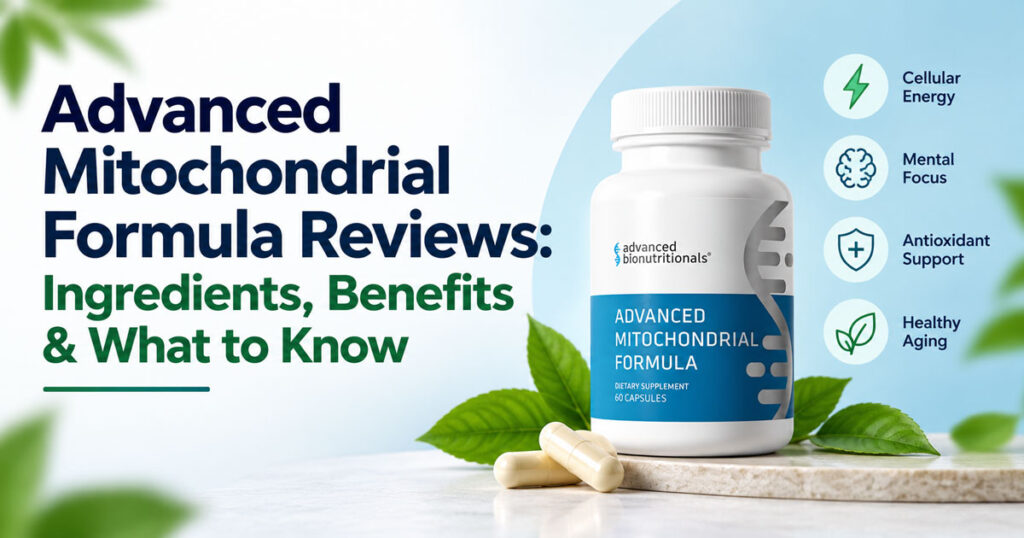
Advanced Mitochondrial Formula is an example of a multi-ingredient approach to mitochondrial and cellular energy support. Its current formula combines several of the ingredients discussed above, including niacinamide, magnesium, curcumin, quercetin, acetyl-L-carnitine, CoQ10, R-alpha-lipoic acid, D-ribose, resveratrol, and PQQ.
The value of looking at a product this way is that you can evaluate the formulation ingredient by ingredient rather than relying only on broad marketing statements. If you are considering it, review the current Supplement Facts panel and serving instructions before making a decision.
Want to Explore a Multi-Ingredient Formula?
If you are comparing mitochondrial support supplements, you can take a closer look at Advanced Mitochondrial Formula, including its ingredient list and formulation, before deciding whether it fits your nutritional goals.
See Advanced Mitochondrial Formula
How to Compare Mitochondrial Support Supplements
Start with the Supplement Facts panel rather than the front of the bottle. Look for specific ingredient names and amounts, then compare those details between products. A transparent label is generally more useful than a long list of ingredients with no individual quantities.
Next, consider your overall diet and lifestyle. Regular physical activity, adequate sleep, a balanced diet, and sufficient intake of essential nutrients remain important foundations for healthy cellular function. Supplements should generally complement those habits rather than replace them.
Are More Ingredients Always Better?
Not necessarily. A long ingredient list can look impressive, but quantity does not equal quality. Some nutrients have stronger evidence for particular uses than others, while some ingredients have mainly preliminary research behind them.
The best approach is to ask what each ingredient contributes and whether the combination makes sense. You should also consider potential interactions, total daily intake, and whether you are already taking other supplements containing the same nutrients.
Final Thoughts
Mitochondrial support supplements can contain a wide range of nutrients, but ten ingredients stand out when comparing comprehensive formulas: niacinamide, CoQ10, PQQ, acetyl-L-carnitine, alpha-lipoic acid, magnesium, D-ribose, curcumin, quercetin, and resveratrol.
Each has a different relationship with cellular energy production, antioxidant activity, or mitochondrial signaling. Rather than looking for a single “best” ingredient, focus on transparent labeling, sensible formulations, appropriate doses, and evidence that matches the claims being made.
And remember that supplements are not a substitute for medical care or a healthy lifestyle. If you take prescription medications, have a medical condition, are pregnant or breastfeeding, or are unsure whether a particular ingredient is appropriate for you, speak with a qualified healthcare professional before starting a new supplement.