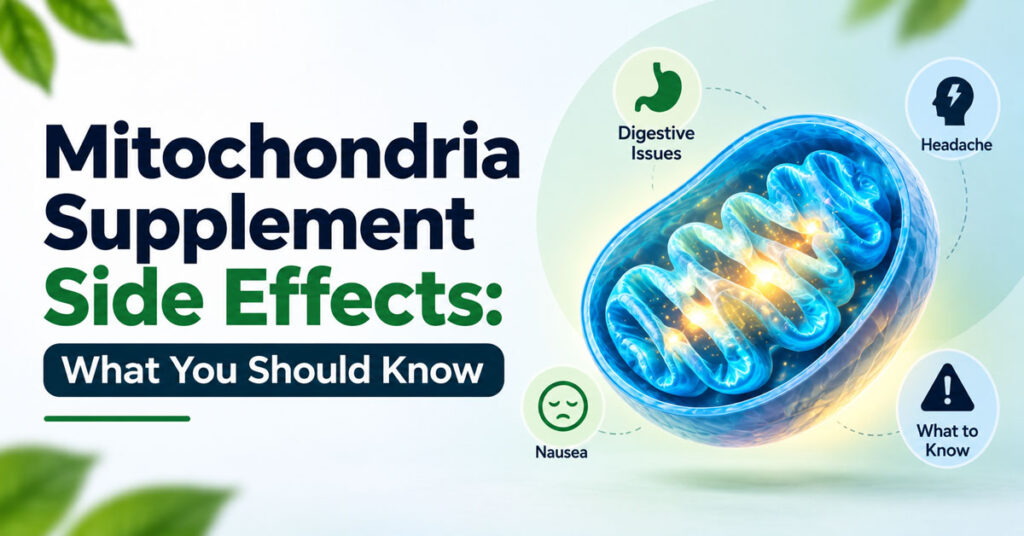
Mitochondria supplement side effects can vary depending on the ingredients, dosage, and individual health needs. These products often combine several vitamins, minerals, amino-acid-related compounds, and plant extracts, so a reaction may come from one particular ingredient rather than the formula as a whole.
Most people researching mitochondrial supplements are interested in supporting cellular energy and healthy aging, but safety deserves equal attention. Understanding the common side effects, potential interactions, and situations where professional advice is appropriate can help you make a more informed decision.
What Are Mitochondrial Supplements?
Mitochondrial supplements are dietary supplements formulated with nutrients associated with cellular energy metabolism and mitochondrial function. Common ingredients include CoQ10, magnesium, B vitamins, acetyl-L-carnitine, alpha-lipoic acid, PQQ, and various plant compounds.
There is no single standard formula for this category. One product may contain only one or two nutrients, while another may combine ten or more ingredients. This makes it important to look at the complete Supplement Facts panel rather than judging a product by its name.
It also means the possible side effects can differ substantially from one mitochondrial supplement to another. The ingredients and their amounts matter more than the general category.
Why Can Mitochondrial Supplements Cause Side Effects?
Dietary supplements can affect the body in different ways depending on their ingredients and doses. A nutrient that is useful in an appropriate amount may cause unwanted effects when consumed in excessive amounts.
Multi-ingredient formulas add another layer of complexity. If a supplement contains magnesium, niacinamide, CoQ10, curcumin, and several other compounds, each ingredient has its own tolerability and interaction considerations.
Individual factors also matter. Age, diet, kidney or liver function, medications, allergies, and other supplements can influence how someone responds. This is why “natural” does not automatically mean risk-free.
Common Mitochondria Supplement Side Effects
Many possible side effects are relatively mild and may involve the digestive system. Depending on the ingredients, some people may experience nausea, stomach discomfort, diarrhea, constipation, heartburn, or changes in digestion.
These effects can sometimes be related to taking a supplement on an empty stomach or consuming several supplements at the same time. However, persistent or severe symptoms should not simply be dismissed as part of the adjustment process.
Headache, dizziness, changes in sleep, or other symptoms can also occur with some individual ingredients. The exact risk depends on the specific product and dosage.
| Possible Effect | Ingredients That May Be Relevant | What to Consider |
|---|---|---|
| Digestive discomfort | Magnesium, curcumin and other ingredients | Dosage and individual tolerance can matter. |
| Diarrhea | Magnesium and certain other compounds | Higher supplemental magnesium intakes are more likely to cause gastrointestinal effects. |
| Nausea or heartburn | Some vitamins and botanical ingredients | Taking supplements with food may be appropriate for some products. |
| Sleep changes | CoQ10 and other individual ingredients | Responses can vary between individuals. |
Magnesium and Digestive Side Effects
Magnesium is commonly included in mitochondrial support formulas because it participates in many biochemical reactions, including processes related to energy metabolism. However, supplemental magnesium can cause digestive problems when the dose is too high for an individual.
The National Institutes of Health’s Office of Dietary Supplements notes that high intakes of magnesium from supplements or medications can cause diarrhea, nausea, and abdominal cramping. The established upper limit for adults is 350 mg per day from supplements and medications, not from magnesium naturally present in food. :contentReference[oaicite:0]{index=0}
People with impaired kidney function need particular caution because the kidneys play an important role in removing excess magnesium from the body.
Niacinamide vs. Niacin: An Important Difference
Some mitochondrial formulas contain niacinamide, also known as nicotinamide, a form of vitamin B3. It is important not to confuse it with nicotinic acid, another form of niacin with a different side-effect profile.
Nicotinic acid can cause the familiar “niacin flush,” which may include skin redness, warmth, burning, tingling, or itching. Niacinamide generally does not cause this type of flushing. However, high doses of niacinamide can still cause adverse effects. :contentReference[oaicite:1]{index=1}
This is one reason checking the exact form and amount of an ingredient is more useful than simply seeing “vitamin B3” on a product label.
CoQ10: Possible Side Effects and Interactions
Coenzyme Q10, or CoQ10, is another common ingredient in mitochondrial supplements. It participates in the mitochondrial electron transport chain and is therefore often included in products focused on cellular energy metabolism.
The National Center for Complementary and Integrative Health reports that serious side effects have not been commonly reported with CoQ10, although mild digestive upset or insomnia can occur. It may also interact with certain medications, including warfarin and insulin. :contentReference[oaicite:2]{index=2}
That does not mean everyone taking CoQ10 will experience a problem. It simply highlights why people using prescription medications should review a supplement’s ingredients with a healthcare professional.
Curcumin and Other Botanical Ingredients
Some mitochondrial formulas include curcumin, quercetin, resveratrol, or other plant compounds. These ingredients are often included because researchers have investigated their antioxidant or cellular signaling properties.
Curcumin deserves particular attention because its safety can depend on the formulation. NCCIH notes that conventional oral turmeric or curcumin is generally considered safe in recommended amounts for short periods, but gastrointestinal effects such as nausea, reflux, stomach upset, diarrhea, or constipation can occur. :contentReference[oaicite:3]{index=3}
NCCIH also notes that highly bioavailable curcumin formulations have been associated with reports of liver injury. Anyone developing symptoms such as dark urine or yellowing of the skin or eyes should stop the product and seek medical advice. :contentReference[oaicite:4]{index=4}
Advanced Mitochondrial Formula: What Is in It?
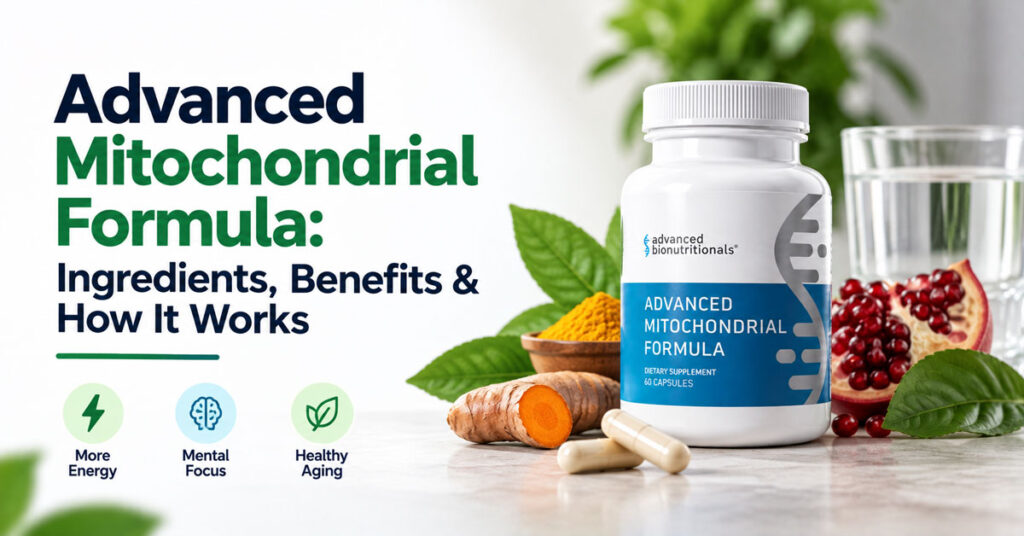
Advanced Mitochondrial Formula is a multi-ingredient product from Advanced Bionutritionals. According to the manufacturer’s current product information, two capsules provide niacinamide, magnesium malate, curcumin, BioPerine, quercetin, acetyl-L-carnitine, CoQ10, R-alpha lipoic acid, D-ribose, trans-resveratrol, and PQQ.
Because the formula contains multiple active ingredients, it is useful to review the complete label before taking it. Someone who already uses a multivitamin, magnesium supplement, CoQ10, or other products should also consider the combined intake from all sources.
The product’s recommended serving is two capsules daily according to the manufacturer’s information. Always check the current product label for the latest serving instructions rather than increasing the amount yourself.
Want to review the formula before buying?
Take a closer look at the current ingredients, serving information, and product details for Advanced Mitochondrial Formula before deciding whether it fits your nutritional needs.
Review Advanced Mitochondrial Formula
Who Should Be More Careful With Mitochondrial Supplements?
Some people should take extra care before starting a multi-ingredient supplement. This includes people who take prescription medications, have kidney or liver problems, are pregnant or breastfeeding, or regularly use several dietary supplements.
Older adults may also be taking multiple medications, making potential supplement-drug interactions particularly important to consider. A healthcare professional or pharmacist can review the complete ingredient list alongside your medications.
Do not assume that a supplement is appropriate simply because its ingredients are vitamins, minerals, or plant extracts. The dose and combination can change the overall safety picture.
Can Mitochondrial Supplements Interact With Medications?
Yes. Certain ingredients can affect medications or have their own precautions. For example, NCCIH notes that CoQ10 may interact with warfarin and insulin, while magnesium supplements can interact with certain medicines, including some antibiotics and other medications. :contentReference[oaicite:5]{index=5}
Herbal ingredients can also interact with medicines. NCCIH recommends discussing herbal products with a healthcare provider if you take medications because some combinations can cause harmful interactions. :contentReference[oaicite:6]{index=6}
Rather than trying to memorize every possible interaction, give your doctor or pharmacist the actual supplement label. This makes it easier to evaluate the complete formula.
How to Reduce the Risk of Side Effects
Start by following the manufacturer’s recommended serving rather than taking more because you want faster results. More of a nutrient does not automatically translate into better mitochondrial support.
Read the entire Supplement Facts panel and check whether other supplements you take contain the same ingredients. This is particularly relevant for nutrients such as magnesium and vitamin B3.
If the label permits it, taking a supplement with a meal may be easier on the stomach for some people. However, follow the product’s specific directions because some formulations may have different instructions.
Finally, introduce only one major supplement change at a time when practical. If you experience an unwanted reaction, this can make it easier to identify which product may be responsible.
When Should You Stop Taking a Supplement?
Mild digestive discomfort should not automatically be ignored, particularly if it continues or becomes worse. Persistent nausea, vomiting, severe abdominal pain, significant dizziness, unusual bleeding, or other concerning symptoms warrant medical advice.
With products containing highly bioavailable curcumin, symptoms that could indicate liver problems deserve particular attention. NCCIH lists fatigue, nausea, poor appetite, dark urine, and jaundice among symptoms associated with reported liver injury. :contentReference[oaicite:7]{index=7}
If you develop a serious or rapidly worsening reaction, seek appropriate medical care rather than attempting to manage the problem by changing the supplement dose yourself.
Are Mitochondrial Supplements Safe for Everyone?
There is no simple yes-or-no answer. Safety depends on the particular product, its ingredients and doses, how long it is used, and the person taking it.
A product that is well tolerated by one person may not be appropriate for another. This is especially relevant when someone has an underlying health condition or takes medications.
It is also important to remember that dietary supplements are not substitutes for medical diagnosis or treatment. If persistent fatigue or another unexplained symptom is the reason you are considering a mitochondrial supplement, it is worth discussing the symptom with a healthcare professional.
Frequently Asked Questions
What are the most common mitochondria supplement side effects?
Possible side effects depend on the formula, but digestive symptoms such as nausea, diarrhea, stomach discomfort, or heartburn can occur with some ingredients. Other effects, including headache or sleep changes, may also occur depending on the specific compounds and individual response.
Can mitochondrial supplements cause diarrhea?
Yes. Magnesium is one example of an ingredient that can cause diarrhea when supplemental intake is high. Other ingredients may also affect digestion. If diarrhea is persistent, severe, or accompanied by other concerning symptoms, stop the supplement and seek appropriate medical advice.
Can I take a mitochondrial supplement with medication?
Possibly, but it depends on the medication and the ingredients in the supplement. Some mitochondrial-support ingredients can interact with medications. If you take prescription or over-the-counter medicines regularly, review the complete Supplement Facts panel with a doctor or pharmacist before starting.
Does Advanced Mitochondrial Formula cause side effects?
Individual responses can vary. Because Advanced Mitochondrial Formula contains multiple active ingredients, possible effects should be considered based on the complete formula rather than the product name alone. Follow the current label directions and discuss suitability with a healthcare professional if you have medical concerns.
The Bottom Line
Mitochondria supplement side effects are usually best understood by looking at the individual ingredients rather than treating all mitochondrial supplements as the same. Magnesium can cause digestive symptoms at higher supplemental intakes, while CoQ10 and botanical ingredients have their own tolerability and interaction considerations. :contentReference[oaicite:8]{index=8}
Advanced Mitochondrial Formula contains a broad combination of nutrients, so reviewing the complete label is particularly important. If you take medications, have a medical condition, or use several supplements, getting professional advice before starting is a sensible precaution.
Most importantly, don’t choose a mitochondrial supplement simply because it promises more energy or better aging. Look at the ingredients, amounts, evidence, and safety considerations, and keep supplements in perspective alongside sleep, nutrition, physical activity, and other foundations of good health.