
How to improve mitochondrial function naturally starts with everyday habits that support energy metabolism, cardiovascular health, muscle function, and overall cellular health. Your mitochondria are constantly responding to what you eat, how active you are, how well you sleep, and other lifestyle factors.
The good news is that supporting mitochondrial health does not necessarily require an expensive supplement routine. Regular exercise, a nutrient-dense diet, adequate sleep, and other healthy habits can provide a strong foundation. Supplements may have a role too, but they work best as part of a broader approach to healthy living.
What Are Mitochondria and Why Do They Matter?
Mitochondria are structures inside cells that help convert energy from food into adenosine triphosphate (ATP), which cells use for many everyday functions. They are especially important in tissues with high energy demands, including skeletal muscle, the heart, and the brain.
Mitochondria do more than produce ATP. They are also involved in cellular signaling, metabolism, and processes related to oxidative balance. Because of these roles, researchers continue to study mitochondrial function in areas such as exercise, aging, nutrition, and metabolic health.
Supporting mitochondrial function is therefore less about finding one “magic” food or supplement and more about creating conditions that help your cells perform their normal functions efficiently.
7 Natural Ways to Support Mitochondrial Function
1. Make Regular Exercise Part of Your Routine
Physical activity is one of the most practical ways to support mitochondrial health. When muscles regularly need more energy, the body adapts to meet those demands. Exercise is associated with changes in mitochondrial content and function in skeletal muscle.
You do not necessarily need an intense workout every day. Walking, cycling, swimming, resistance training, and other forms of regular movement can all contribute to an active lifestyle.
A simple approach is to combine moderate aerobic activity with strength training. If you have been inactive, start gradually and increase your activity as your fitness improves.
2. Eat a Nutrient-Dense, Balanced Diet
Mitochondria depend on a wide range of nutrients to support normal cellular metabolism. A balanced diet provides vitamins, minerals, protein, healthy fats, carbohydrates, and other compounds that the body uses in energy-related pathways.
Rather than focusing on a single “mitochondrial food,” build meals around vegetables, fruits, legumes, whole grains, nuts, seeds, quality protein sources, and healthy fats.
Colorful plant foods can also provide naturally occurring compounds with antioxidant properties. The overall dietary pattern matters more than any individual ingredient.
3. Include Healthy Sources of Protein
Protein provides amino acids needed for maintaining and repairing tissues. This is particularly relevant for skeletal muscle, which has a high energy demand and contains large numbers of mitochondria.
Good options can include fish, eggs, poultry, dairy products, beans, lentils, tofu, nuts, and seeds. The best choices depend on your dietary preferences and nutritional needs.
For active adults, pairing adequate protein with regular resistance exercise can be a useful strategy for maintaining muscle as part of a healthy lifestyle. Maintaining muscle also supports mobility and physical independence as people get older.
4. Prioritize Consistent, Quality Sleep
Sleep is often overlooked when people talk about cellular health. Your body uses sleep as a period for restoration and regulation, making consistent sleep an important part of overall health.
Adults generally need around seven or more hours of sleep per night, although individual needs vary. A consistent bedtime, a comfortable sleep environment, and limiting stimulating activities close to bedtime can help support good sleep habits.
If you regularly have difficulty sleeping despite making healthy changes, it may be worth discussing the issue with a healthcare professional rather than simply relying on supplements.
5. Manage Chronic Stress
Some stress is a normal part of life, but ongoing psychological stress can affect sleep, eating habits, physical activity, and other behaviors that influence overall health.
Managing stress does not require a complicated routine. Walking outdoors, spending time with friends or family, practicing relaxation exercises, maintaining hobbies, and taking regular breaks from work can all be useful strategies.
The goal is not to eliminate every stressful situation. Instead, focus on building healthy ways to respond to everyday stress and protecting time for recovery.
6. Avoid Smoking and Limit Excessive Alcohol
Healthy mitochondrial function is closely connected with the body’s overall cellular environment. Smoking exposes the body to numerous harmful substances and can negatively affect cardiovascular and respiratory health.
Alcohol can also have health effects that depend on how much and how often a person drinks. If you drink, keeping consumption moderate is generally a more sensible approach than assuming alcohol provides a mitochondrial benefit.
For people who smoke, quitting can provide substantial health benefits. If quitting is difficult, healthcare professionals and evidence-based cessation programs can provide practical support.
7. Consider Targeted Nutritional Support
A nutritious diet should be the foundation, but some people also explore supplements containing nutrients associated with mitochondrial energy metabolism. Common examples include CoQ10, magnesium, acetyl-L-carnitine, alpha-lipoic acid, PQQ, and certain B vitamins.
These ingredients do not all work in the same way. Some participate in energy metabolism, while others are involved in enzymatic reactions, antioxidant systems, or other cellular processes.
Importantly, taking more of a nutrient does not automatically mean better mitochondrial function. The evidence varies between ingredients, doses, and health outcomes, so supplements should be selected carefully.
Foods and Nutrients That May Support Cellular Energy
| Food or Nutrient | Why It May Be Useful | Food Examples |
|---|---|---|
| Magnesium | Involved in numerous biochemical reactions, including energy metabolism. | Leafy greens, nuts, seeds, legumes |
| CoQ10 | Participates in the mitochondrial electron transport chain. | Fish, meat, some nuts and seeds |
| B Vitamins | Several B vitamins participate in normal energy metabolism. | Whole grains, eggs, legumes, meat, leafy greens |
| Healthy Fats | Provide energy and support normal cellular functions. | Olive oil, nuts, seeds, avocado, fatty fish |
| Protein | Provides amino acids needed for tissue maintenance and repair. | Fish, eggs, dairy, beans, lentils, tofu |
This table is intended as a general guide rather than a prescription. A varied diet is usually the best way to obtain a broad range of essential nutrients.
Can Mitochondrial Supplements Replace a Healthy Lifestyle?
No. A supplement cannot compensate for consistently poor sleep, inactivity, an unbalanced diet, or smoking. These lifestyle factors influence many aspects of health beyond mitochondria.
Think of supplements as potentially complementary rather than foundational. If your daily habits are already supporting good nutrition, movement, sleep, and recovery, a carefully selected supplement may be considered as an additional source of specific nutrients.
This distinction is particularly important because the marketing around mitochondrial health can sometimes make supplements sound more powerful than the available evidence supports.
Advanced Mitochondrial Formula as a Nutritional Support Option
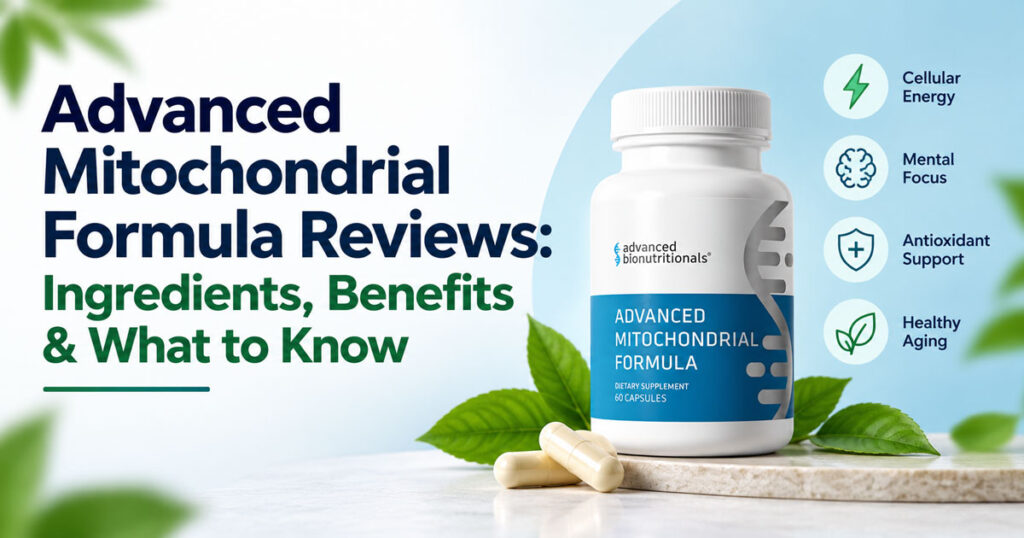
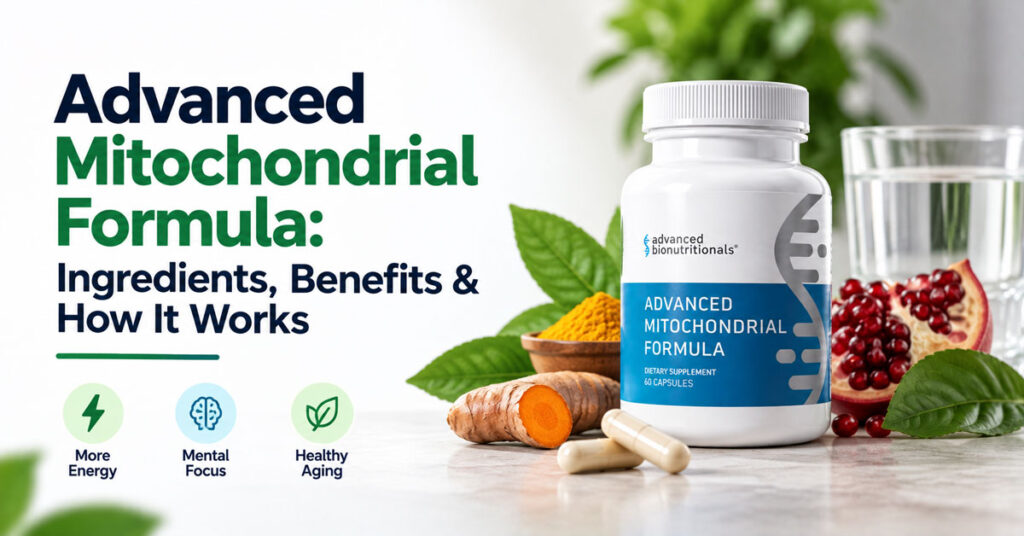
For people interested in a multi-ingredient approach, Advanced Mitochondrial Formula combines several nutrients commonly discussed in relation to mitochondrial and cellular energy processes.
According to the manufacturer’s current product information, the formula contains niacinamide, magnesium, curcumin, BioPerine, quercetin, acetyl-L-carnitine, CoQ10, R-alpha lipoic acid, D-ribose, trans-resveratrol, and PQQ.
The advantage of examining a formula like this is that you can evaluate several ingredients in one product rather than purchasing individual supplements separately. However, it is still important to review the Supplement Facts panel, serving size, ingredient amounts, and your own nutritional needs before making a decision.
Looking for a mitochondrial support formula?
Explore the ingredients and serving information in Advanced Mitochondrial Formula to see how its multi-nutrient approach compares with your current nutritional goals.
Explore Advanced Mitochondrial Formula

How Long Does It Take to Support Mitochondrial Health?
There is no universal timeline for improving mitochondrial function. The body responds to exercise, nutrition, sleep, and other lifestyle changes over different time periods, and measurable changes do not necessarily correspond to how energetic someone feels.
For example, becoming more physically active can lead to adaptations over time, while improving sleep habits may affect how you feel relatively quickly. Nutritional changes can also take time to influence overall dietary status.
Consistency is therefore more useful than searching for an overnight solution. Small habits that you can maintain for months are generally more practical than extreme short-term approaches.
Simple Daily Routine for Mitochondrial Support
| Part of the Day | Simple Habit |
|---|---|
| Morning | Start with a balanced meal and some light movement. |
| Daytime | Stay physically active and choose nutrient-dense meals. |
| Afternoon | Take movement breaks instead of sitting continuously for long periods. |
| Evening | Wind down and create a consistent sleep routine. |
| Weekly | Include both aerobic activity and resistance training as appropriate. |
Frequently Asked Questions
Q1. What is the best natural way to support mitochondrial function?
There is no single best method. Regular exercise, a balanced diet, adequate sleep, stress management, and avoiding smoking provide a strong foundation. These habits support overall health while also influencing processes involved in normal mitochondrial function.
Q2. Can exercise improve mitochondrial function?
Yes. Regular physical activity, particularly endurance and resistance exercise, is associated with beneficial adaptations in skeletal muscle mitochondria. Beginners should increase activity gradually and choose exercises appropriate for their current fitness level.
Q3. Are mitochondrial supplements necessary?
Not necessarily. Many people can obtain the nutrients required for normal energy metabolism through a balanced diet. Supplements may be useful in specific circumstances, but the appropriate choice depends on individual nutritional needs, diet, medications, and health conditions.
Q4. Can mitochondrial health improve with age?
Lifestyle habits remain important throughout adulthood. Regular physical activity, nutritious eating, adequate sleep, and maintaining muscle can support healthy aging. However, no supplement or lifestyle change should be presented as a way to reverse aging or guarantee a particular health outcome.
The Bottom Line
If you want to know how to improve mitochondrial function naturally, start with the basics. Move your body regularly, eat a varied and nutrient-rich diet, get consistent sleep, manage stress, maintain healthy muscle, and avoid habits such as smoking.
Mitochondrial supplements can provide additional nutritional support, but they should complement—not replace—these fundamentals. If you choose a supplement, examine its ingredients and dosages carefully and consider speaking with a healthcare professional, particularly if you take medication or have an existing health condition.