A mitochondria supplement is designed to provide nutrients that support the body’s natural energy-producing processes. Mitochondria are often called the “powerhouses” of cells because they help convert nutrients from food into usable cellular energy. As interest in healthy aging, energy, and cellular health grows, these supplements have become a popular topic.
But what exactly do they contain, and what can they realistically do? The answer depends on the ingredients, their amounts, the quality of the formula, and the individual’s nutritional needs. This guide explains how mitochondrial supplements work, what to look for on a label, and where Advanced Mitochondrial Formula fits into the picture.
What Are Mitochondria?
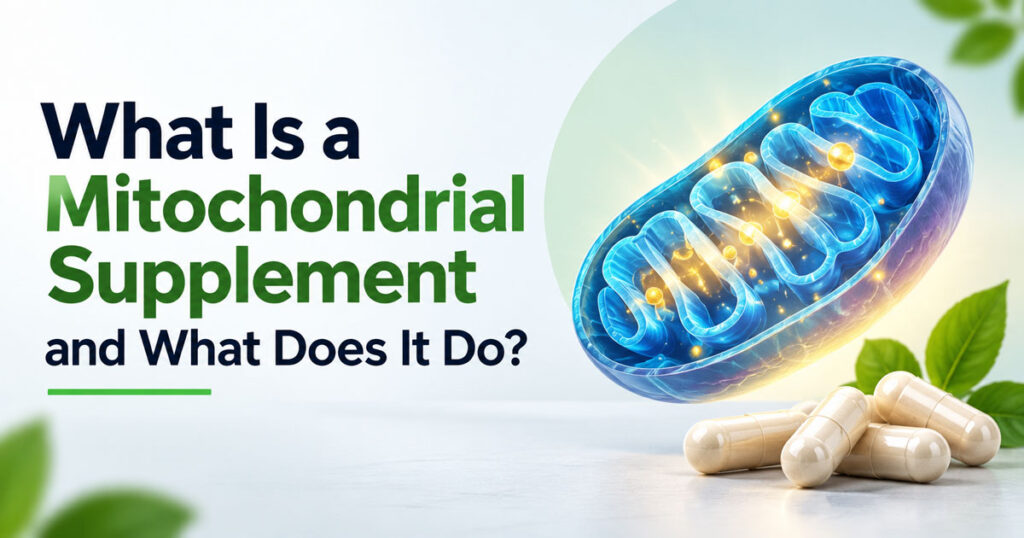
Mitochondria are specialized structures found inside most human cells. Their best-known role is producing adenosine triphosphate (ATP), a molecule cells use as a readily available source of energy.
The process is more complicated than simply “making energy.” Mitochondria work with nutrients, oxygen, enzymes, and several biochemical pathways to help convert the energy stored in carbohydrates, fats, and other nutrients into ATP.
Because cells have different energy demands, mitochondrial activity is particularly important in tissues that require substantial amounts of energy, including muscle, heart, and brain tissue.
Mitochondria also participate in other cellular processes, including signaling and the regulation of oxidative balance. This is one reason researchers continue to study mitochondrial health in relation to normal aging, exercise, nutrition, and overall cellular function.
What Is a Mitochondrial Supplement?
A mitochondrial supplement is a dietary supplement formulated with nutrients or compounds selected for their potential role in supporting mitochondrial function, cellular energy metabolism, or antioxidant defenses.
There is no single ingredient that defines a mitochondrial supplement. Instead, formulas can combine several nutrients that participate in different aspects of cellular energy production.
Common examples include CoQ10, PQQ, magnesium, acetyl-L-carnitine, alpha-lipoic acid, ribose, and certain B vitamins. Some products also include plant compounds such as resveratrol or curcumin.
The important point is that these products are intended to support normal biological processes. They should not be viewed as a treatment for a disease or as a guaranteed solution for tiredness or other health concerns.
What Does a Mitochondrial Supplement Do?
Different ingredients may support different parts of mitochondrial biology. For example, some nutrients are involved in energy metabolism, while others participate in antioxidant systems or cellular processes associated with mitochondrial function.
CoQ10 is a good example. It plays an important role in the mitochondrial electron transport chain, which is involved in ATP production. Magnesium is another essential mineral involved in numerous biochemical reactions, including processes related to energy metabolism.
Other compounds are being investigated for their potential effects on mitochondrial signaling, oxidative balance, or energy-related pathways. However, evidence varies considerably between ingredients, doses, and specific health outcomes.
So, rather than thinking of a mitochondrial supplement as an “energy booster” in the same way as caffeine, it is more accurate to view it as nutritional support for processes involved in cellular energy production.
Common Ingredients Found in Mitochondrial Supplements
| Ingredient | Why It Is Included |
|---|---|
| CoQ10 | Participates in mitochondrial energy production and antioxidant processes. |
| PQQ | Studied for its relationship with cellular signaling and mitochondrial biology. |
| Magnesium | Essential mineral involved in energy metabolism and many enzymatic reactions. |
| Acetyl-L-Carnitine | Involved in transporting fatty acids into mitochondria for energy metabolism. |
| Alpha-Lipoic Acid | Participates in mitochondrial enzyme complexes and antioxidant activity. |
| D-Ribose | A sugar used by the body in the production of nucleotides, including components related to ATP. |
| Niacinamide | A form of vitamin B3 used in pathways involving NAD, an important cellular coenzyme. |
These ingredients do not all work in the same way. Their inclusion in a formula does not automatically mean that taking more will produce greater benefits. Dosage, formulation, individual nutritional status, and the quality of evidence all matter.
How Do Mitochondrial Supplements Support Energy Production?
To understand the concept, imagine cellular energy production as a series of connected steps rather than a single switch. Mitochondria rely on multiple nutrients and coenzymes to keep these processes operating normally.
For instance, NAD-related compounds participate in reactions involved in cellular metabolism. CoQ10 helps transfer electrons within the mitochondrial electron transport chain, while magnesium supports numerous reactions throughout the body.
Carnitine has a different role because it helps transport long-chain fatty acids into mitochondria, where they can be used in energy metabolism.
A well-designed formula therefore may combine ingredients with complementary roles. That does not mean the supplement directly “creates energy” by itself. Instead, its ingredients provide nutritional support for the biological machinery your cells already use.
Potential Benefits of Mitochondrial Support Supplements
The potential benefits depend heavily on the ingredients included and the individual taking them. In general, mitochondrial support supplements are marketed around areas such as cellular energy, normal energy metabolism, exercise performance, healthy aging, and antioxidant support.
Some individual ingredients have been studied in human research, but the results are not necessarily interchangeable with the effects of an entire multi-ingredient supplement.
It is also important to separate feeling energetic from mitochondrial function itself. A supplement containing a stimulant may make someone feel more alert without directly improving mitochondrial biology. Conversely, a non-stimulant nutritional formula may support cellular processes without producing an immediate noticeable sensation.
For these reasons, realistic expectations are important when evaluating any mitochondrial supplement.
Advanced Mitochondrial Formula: An Example of a Multi-Ingredient Approach
Advanced Mitochondrial Formula is one example of a supplement built around multiple nutrients associated with mitochondrial and cellular energy processes. According to the manufacturer’s current product information, its formula combines ingredients including niacinamide, magnesium, curcumin, BioPerine, quercetin, acetyl-L-carnitine, CoQ10, R-alpha lipoic acid, D-ribose, trans-resveratrol, and PQQ.
The approach is different from relying on a single nutrient. Instead, the formula combines compounds with different nutritional and biochemical roles. This can make the ingredient label useful to examine closely, particularly when comparing mitochondrial support products.
If you are considering a multi-ingredient formula, look beyond the front of the bottle. Check the complete Supplement Facts panel, serving size, ingredient amounts, manufacturer information, and directions for use.
Interested in exploring a mitochondrial support formula?
Take a closer look at the ingredients, serving information, and product details of Advanced Mitochondrial Formula before deciding whether it fits your nutritional goals.
What Should You Look for in a Mitochondrial Supplement?
There are dozens of products in this category, and their formulas can differ substantially. Start by looking for transparent labeling. A reputable product should clearly identify its ingredients and the amount provided per serving.
It is also worth considering whether the ingredients have a reasonable scientific basis for their intended role. Human evidence is generally more useful than relying solely on laboratory or animal studies.
Finally, avoid products that make dramatic promises. Claims such as instantly reversing aging, curing chronic conditions, or guaranteeing unlimited energy should be treated as warning signs.
A sensible approach is to evaluate the entire formula rather than choosing a product simply because it contains the largest number of ingredients.
Are Mitochondrial Supplements Right for Everyone?
Not necessarily. Dietary supplements can interact with medications or may not be appropriate for people with certain medical conditions. Individual ingredients can also have different safety considerations.
If you take prescription medication, are pregnant or breastfeeding, have an existing medical condition, or are unsure whether a particular ingredient is appropriate for you, speak with a qualified healthcare professional before starting a supplement.
It is also worth remembering that supplements are not a substitute for the fundamentals of mitochondrial and metabolic health. Regular physical activity, adequate sleep, a balanced diet, and sufficient intake of essential nutrients remain important parts of overall health.
Frequently Asked Questions
Q1. Do mitochondrial supplements give you instant energy?
Not necessarily. Unlike caffeine, mitochondrial supplements generally are not designed to provide a rapid stimulant effect. Their ingredients are intended to support normal cellular processes involved in energy metabolism. Whether someone notices a difference, and how quickly, can vary considerably.
Q2. Are mitochondrial supplements the same as energy supplements?
Not exactly. Energy supplements can contain stimulants or ingredients intended primarily to increase alertness. Mitochondrial supplements generally focus on nutrients associated with cellular energy metabolism and mitochondrial function. Some products can overlap between the two categories.
Q3. What is the best mitochondrial supplement?
There is no universally best product for everyone. Compare the ingredient list, dosages, transparency, quality standards, evidence behind the ingredients, and the manufacturer’s information. Your personal nutritional needs should also be considered.
Q4. Can food support mitochondrial health?
Yes. A balanced diet provides many nutrients involved in normal energy metabolism. Foods containing protein, healthy fats, whole grains, fruits, vegetables, and essential vitamins and minerals can contribute to overall nutritional health. Supplements should generally complement, rather than replace, a nutritious diet.
The Bottom Line
A mitochondria supplement is best understood as a nutritional product designed to support processes involved in mitochondrial function and cellular energy metabolism. Ingredients such as CoQ10, magnesium, PQQ, acetyl-L-carnitine, alpha-lipoic acid, and B vitamins can have different roles within these processes.
The most useful way to evaluate one is to look at the complete formula, ingredient amounts, quality of evidence, and the claims being made. Advanced Mitochondrial Formula offers a multi-ingredient approach, but individual responses can vary. As with any dietary supplement, informed decisions and realistic expectations matter.